
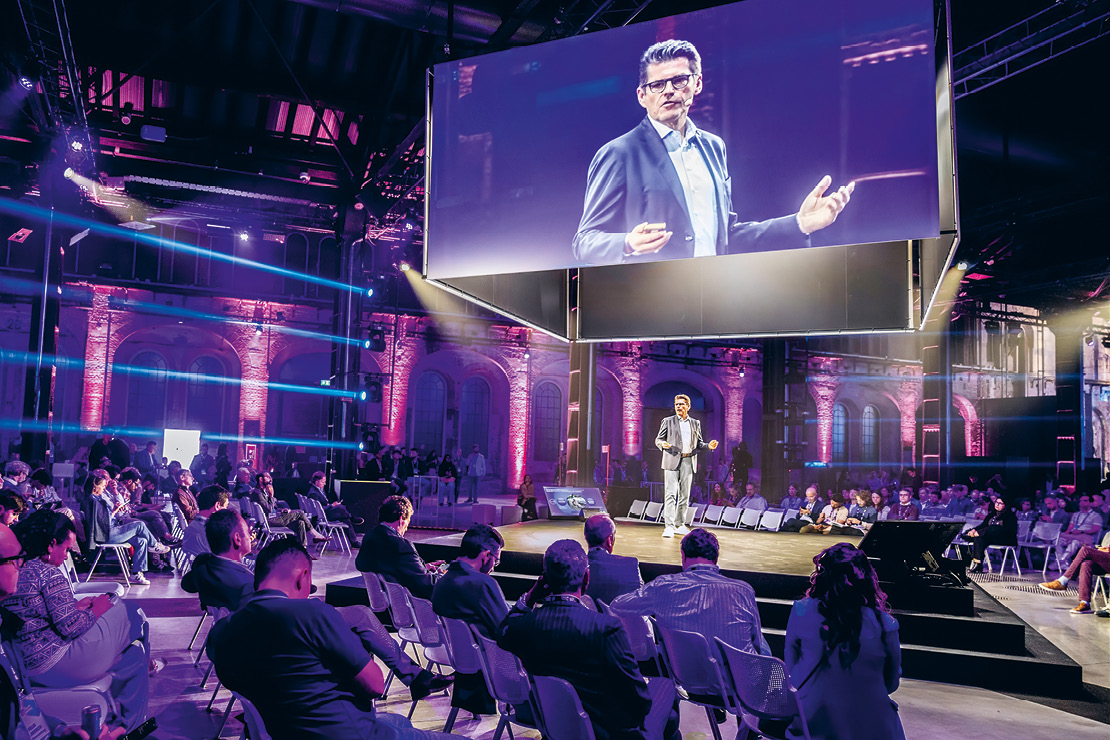
In Dialog with Juergen Reers
Automotive manufacturing is under unprecedented pressure right now: volumes are volatile, product complexity is rising, and the cost of change is going up at the same time as the need to change faster. The response can’t be »more automation« in the traditional sense. The next wave is about intelligence that understands the real world, learns in realistic environments, and can be deployed safely across heterogeneous plants – we are talking about physical AI.
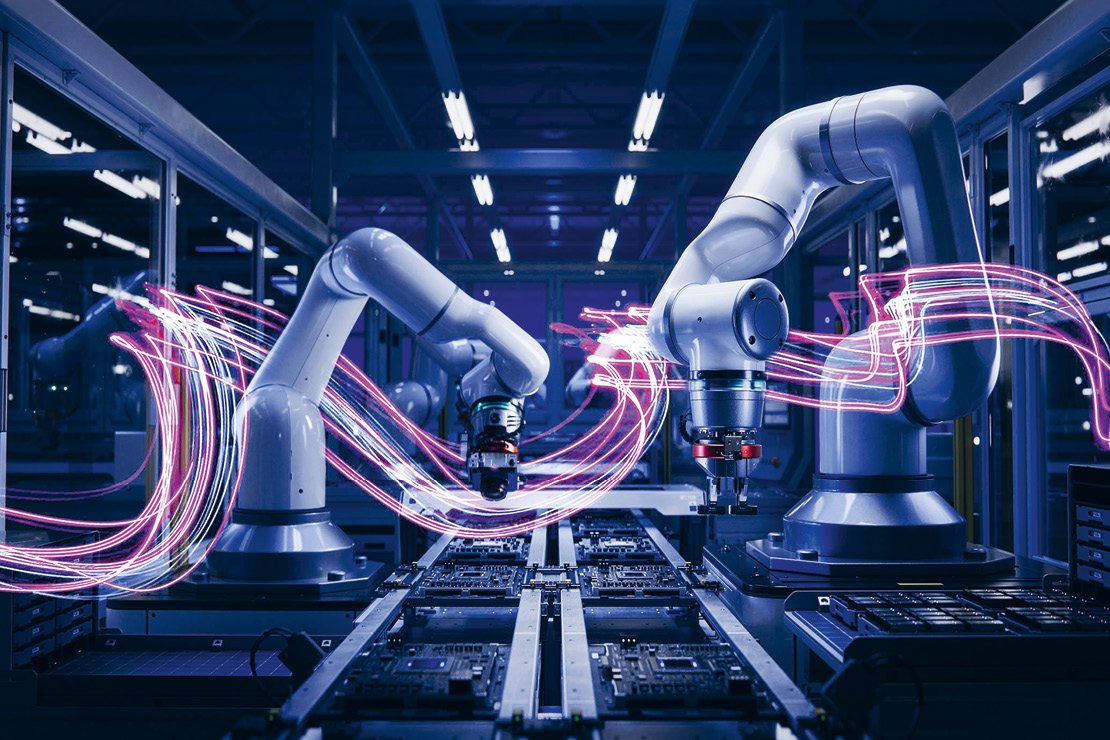
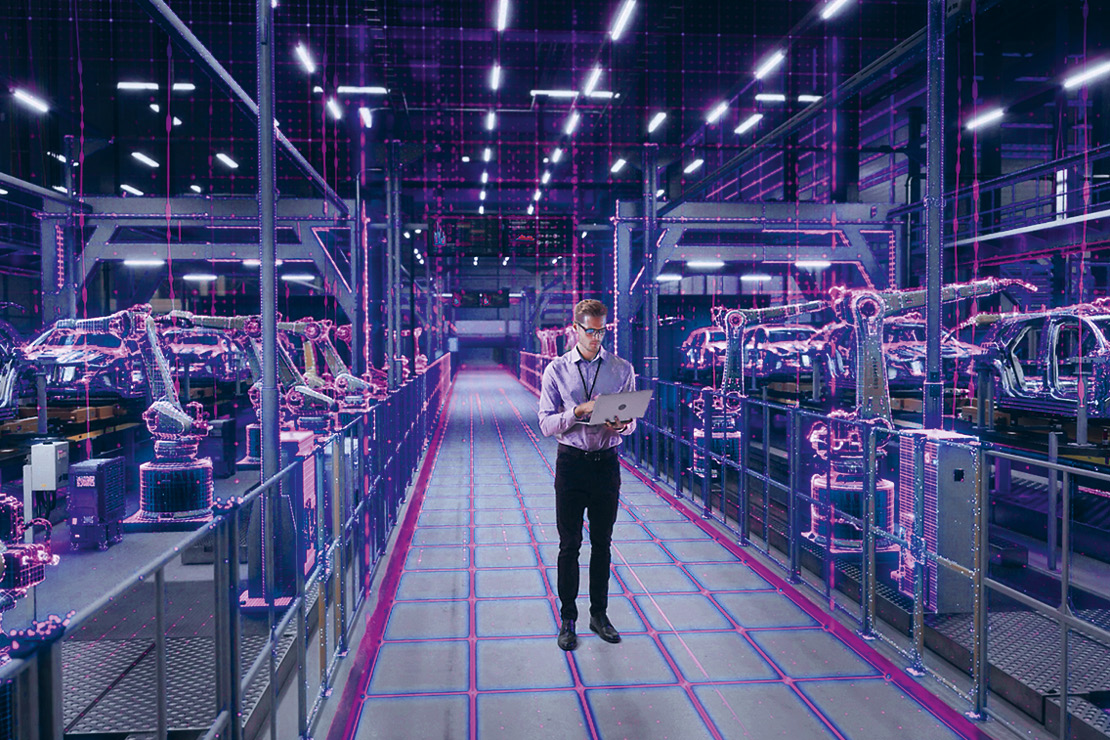
In practice, it means digital twins that don’t just visualize a factory, they behave like it. Think virtual commissioning that catches issues before metal is cut, and fleets of robots (from autonomous mobile robots to humanoids) that are trained and coordinated in a high-fidelity virtual world in which the laws of physics apply before they ever enter a safety-critical shopfloor.
Juergen, technology is moving very fast these days – how is Accenture helping automotive manufacturers navigate those rapid developments?
Not just the technology, the broader ecosystem is also maturing rapidly. It’s all about reinventing industrial automation with physical AI and robotics. Last year, Accenture and Schaeffler, together with NVIDIA and Microsoft, showed how to optimize warehouse scenarios with digital twins, autonomous mobile robots, adaptive manipulators and general-purpose humanoids.
This year, we invested in General Robotics to help clients deploy and continuously adapt robots of any form, with modular AI skills, cloud-based orchestration and simulation training, emphasizing sovereignty over data and intellectual property as robotics scales.
A lot is happening across the board, and we are supporting our clients along the way to reinvent how they operate – not only by deploying advanced technologies at scale, but by orchestrating entire ecosystems together with them. This reinvention is not a pure tech play, it’s a joint journey. We are working closely with our customers to rethink operations end-to-end, while enabling the organizational change, skills transformation and workforce reskilling needed to make this shift sustainable.
Speaking about »Physical AI«: Where do you see automotive manufacturing to date?
With more than 60 years of robotics adoption, the industry is ahead of most others. Automotive manufacturing is the ideal environment for physical AI, because it’s already a highly automated, data-rich space and one of the most complex and safety-critical ones. Physical AI helps manufacturers manage that complexity with fewer surprises in the real world, but the complexity should not be underestimated. So, while the industry is already moving towards AI-driven adaptive production and creating real value today, full autonomy remains a next-decade transition. You see, fully autonomous execution requires extensive physical validation, and the gap between the digital twin and a live, safety-critical line is still significant. Agentic AI provides an engine that can help clients get to physical AI faster, for example, when engineers use agentic AI to accelerate line simulation and setup, and adjust machine settings in near real time during ramp-up.
What’s the biggest »hidden« challenge in physical AI programs – and how do automotive leaders get ahead of it?
It comes down to governance and integration. Physical AI is not a standalone application, it touches safety, data, OT/IT, suppliers and people. You need clear ownership, a security posture that fits a plant environment, and rules for how models learn and evolve over time.
I also see increasing importance in data and IP sovereignty as robotics becomes more strategic, like in the robotics intelligence platform of one of our partners, General Robotics. When leaders treat physical AI and these dimensions as an operating model change, not just a technology deployment, scaling becomes viable.
What changes do you envision for the workforce when physical AI and robotics scale?
Workforce transformation is critical – 70% of the factory managers we have surveyed say so. The answer is a human plus machine operating model. Robots and AI will take on more execution, with people remaining accountable and in the lead, especially for safety and continuous improvement. Beyond that, trust is essential. You need to build trust among the workforce, and this comes from transparent decisions, guardrails and clear escalation paths. The human plus machine operating model addresses both labor shortages due to an aging workforce and overall production cost pressure.
For automotive executives, what are the KPIs that matter most?
You need to tie it to operational economics: throughput, first-time quality, downtime, changeover time, and the cost and speed of commissioning. If a program doesn’t improve quality, productivity and speed at the same time, it’s a distraction. The most convincing metrics are reduced rework, faster commissioning and lower cost-to-change – exactly where AI-enabled simulations show measurable improvements.
Europe – and especially Germany – is under pressure to remain competitive in manufacturing. How can physical AI strengthen the region’s industrial base?
Europe’s strength has always been engineering depth, quality and industrial scale. But today, that alone is not enough. The competitive gap we see globally is about speed, flexibility and cost-to-change. This is where physical AI becomes highly relevant for Germany and Europe.
First, it allows manufacturers to industrialize faster and with lower risk. When you can simulate and validate an entire plant or production change before deploying it, you reduce capital inefficiencies and shorten time-to-value, which is critical in a high-cost environment.
Second, it helps address structural challenges such as labor shortages and productivity pressure. Physical AI and robotics are not about replacing people – these technologies are about augmenting a shrinking and highly skilled workforce so plants can operate consistently at a high level.
And third, it reinforces Europe’s position in high-value manufacturing. The combination of digital twins, AI and industrial expertise allows companies to move from cost-driven competition to capability-driven competition.
Importantly, this applies not only to modernizing existing factories, but also to building new ones. While brownfield transformation will dominate in the near term, European manufacturers must not lose a »smart from the start« mindset for greenfield sites. Designing new plants with digital twins, AI, and automation embedded from day one is critical to competing globally on both cost and quality, especially with China.
Ultimately, from my point of view, the key question is not whether Europe can compete, but whether we are willing to adopt the operating models that allow us to compete at the new global pace. Physical AI is one of the most important levers to do exactly that.
Treat physical AI as a new operating system for manufacturing – it’s how Europe can combine engineering strength with the speed and scalability required to stay competitive.
Where do you see the strongest »right-now« use cases in an automotive plant?
Three clusters stand out. First, digital operation twins that optimize throughput, quality and energy in near real time. Second, virtual commissioning to validate layouts, material flows and robot paths before you change the line. Third, robotics at scale in intralogistics and repetitive handling, where training and safety validation in simulation avoids costly trial-and-error on the shopfloor.
Where should automotive leaders start if they want impact now, not in 36 months?
Pick a use case that is painful, measurable and already data-rich, like virtual commissioning for an upcoming line change or robotics in intralogistics are ideal starting points. The feedback loop is fast, the ROI is visible, and you build the organizational muscle needed to scale. But you should not treat it purely as a technology pilot.
Define data ownership, align on OT/IT security, define AI’s role and tasks, and ensure humans remain accountable. This is the foundation that separates a proof of concept that scales from one that stalls. The leaders who move fastest are not those with the biggest budgets – they are the ones who treat the first deployment as a learning system and build the operating model to absorb what comes next and is designed to scale.